Want to keep students engaged, supported, and on track to graduate? Education CRMs help schools do exactly that by organizing student data, sending timely reminders, and giving personalized support. With the right CRM, institutions can prevent dropouts, boost retention, and help every student succeed.

In this blog, we’ll talk about education CRM solutions and how they can help keep students in school. An education CRM gives schools the tools they need to help students before they need it by centralizing student data, starting interventions early, and tailoring outreach. Read on if you want to improve your student support systems. If you want a custom CRM made just for you, you can learn more about Wavenest’s software development services.
Why Traditional Retention Approaches Aren’t Enough
Many schools still use manual advising and simple alert systems, but research shows that these methods don’t always pick up on how students act. Conventional retention strategies typically respond solely when students exhibit significant difficulties. On the other hand, a modern education CRM that uses predictive analytics can find small changes, like changes in behavior or less interest, and send help right away. This proactive, data-driven model fills in a gap in research and helps schools find students who are at risk much earlier.
How Education CRM Creates Real-Time Student Engagement
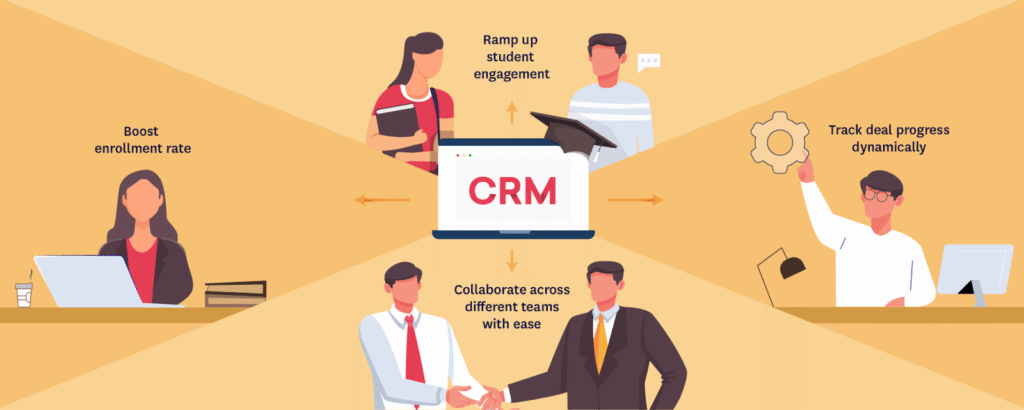
An education CRM keeps students interested by sending them personalized messages, automated reminders, tailored program suggestions, and feedback on time. It’s not enough to just send emails; you need to make sure that every student feels seen and supported. Schools that use these tools say they have better connections, which leads to better academic results and more students who stick with it.
Detecting Risk Early with Predictive Analytics
One of the most vital benefits of education CRM is advanced risk detection. By analyzing academic performance, attendance and engagement, predictive models identify students at risk classified as “warning signs.” Early warning systems have been proven to improve retention rates through timely outreach. For instance, big-data driven alert systems can profile socio-academic needs to generate automated interventions tailored to specific circumstances.
Building Comprehensive Student Profiles for Better Support
An education CRM builds a full 360-degree profile of each student. It aggregates performance data, engagement history, communications, and support interactions. Advisors use this complete view to give highly personalized guidance, helping students navigate course selections, deadlines, or support services more intelligently.
Automating Workflows to Free Up Faculty Time
An education CRM develops a comprehensive 360-degree profile of each learner by aggregating performance data, engagement history, communications, and support interactions. With this complete perspective, advisors deliver personalized guidance to help students better manage their course selections, deadlines, and support services.Institutions can also use Wavenest workflow automation services to build these systems in a way that matches their processes
Data-Driven Insights Fuel Smarter Interventions
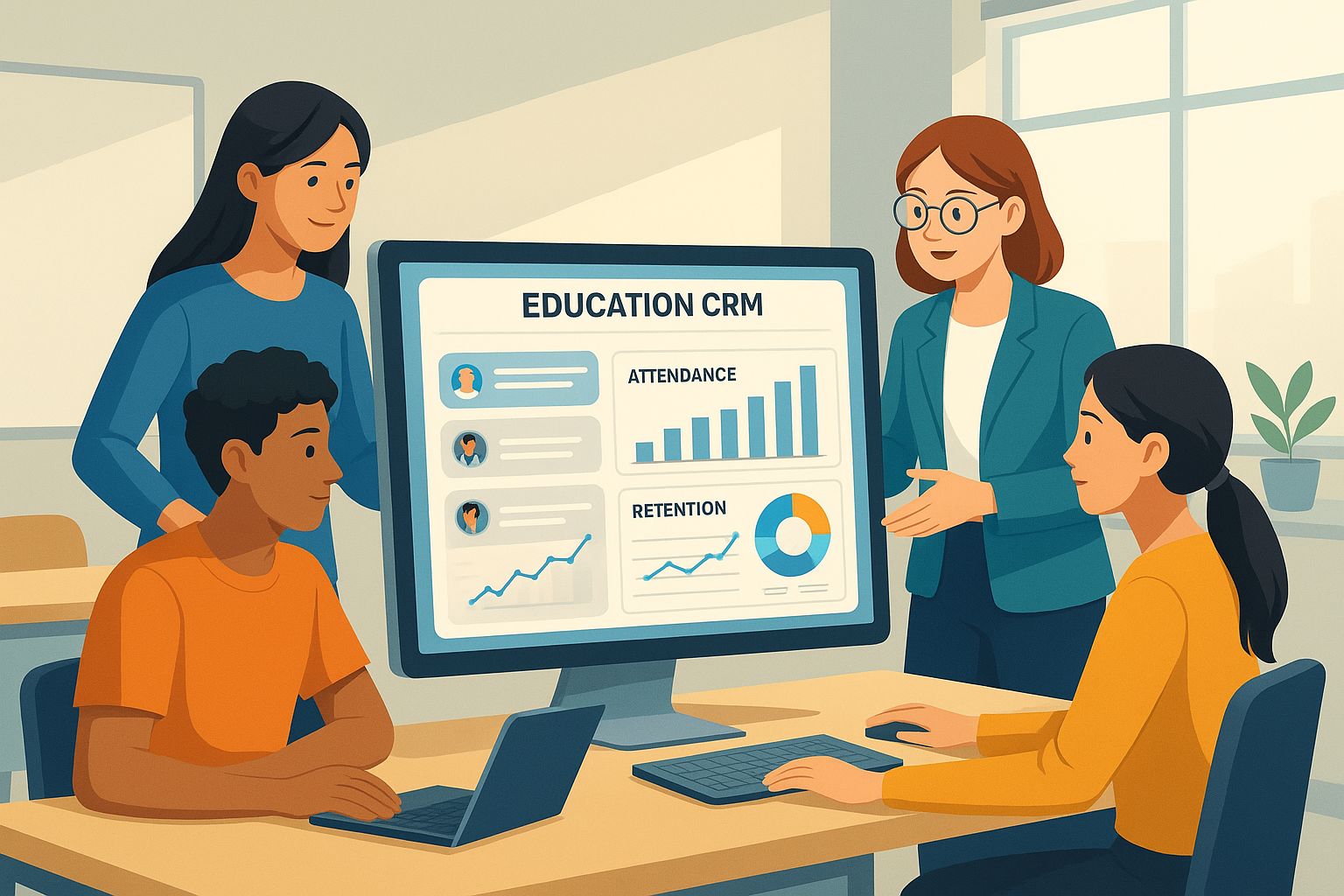
Dashboards embedded in CRMs offer timely information about risk trends: which students are disengaged, which courses generate bottlenecks, and when performance falls. With these insights grounded on data, institutions can act proactively. Using analytics to inform retention strategies can dramatically enhance results.
Scaling Care with Emotional Intelligence
Retention is more than a problem of numbers – it’s emotional. When students feel that their university cares, they stay enrolled. A CRM allows a university to send check-ins, be aware of when students have achieved something, and respond quickly when a student engages. All of this predictive care, along with emotional touch, creates a sense of belonging the lever for long-term persistence.
The Future: AI and GenAI in Education CRM
New research shows that adding generative AI into an education CRM can elevate retention. AI can analyze unstructured data, generate narratives for intervention, and even power r virtual assistants that contact and respond to students. With this or other co‑intelligence models, human like care is increased in efficiency, artificial or hybrid intelligence scales human-like care, and institutions are empowered with smarter support systems.
Proven Retention Strategies You Can Implement
Based on research and best practices, here are key strategies to improve retention with education CRM solutions:
- Use predictive analytics to flag at-risk students early.
- Use data-informed messaging to create personalized communications associated with milestones in a student’s journey.
- Create holistic profiles of students to facilitate advisors in personalizing student support proactively.
- Automate workflows to relieve administrative burden and response times.
- Track and action engagement analytics to identify drop-off patterns.
- Utilize supplemental academic programming like peer study groups (often called supplemental instruction) in tandem with CRM outreach.
Choosing the Right Education CRM for Your Institution
Here’s how to pick a CRM that genuinely improves retention:
-
Predictive intelligence
: Confirm the CRM incorporates predictive warning models using behavioral and performance data.
-
Integration:
Validate everything works effortlessly with your SIS, LMS, and BI tools.
-
Automation & workflows:
Your system should handle notifications, scheduling, and routing intervention entirely free of manual effort.
-
Custom development capacity
: If existing CRMs don’t meet your needs, consider a custom CRM solution from Wavenest.
-
Scalability & ethical AI: Assess the extent that your chosen system is respecting data privacy and has the capability to scale with your institution’s needs, especially as you move into AI models.
Why Education CRM Is Your Retention Game-Changer
An education CRM is not just a software solution; it is a strategic partner in student success. Education CRMs combine real-time data with emotional intelligence to provide timely support, detect risk early, and help maintain connections at scale. With a data-informed system, institutions are not just reactive; they provide guided intent to develop student journeys. If you are ready to build a retention first CRM specifically designed for your school, contact Wavenest to discuss development support.
FAQ:
Q1: What is an Education CRM and how does it work?
Ans: An Education CRM organizes student data and communication in one place. It helps schools provide personalized support and track progress.
Q2: How can Education CRM improve student retention?
Ans: It identifies at-risk students and sends reminders or alerts. This keeps students engaged and reduces dropouts.
Q3: Can small colleges benefit from an Education CRM?
Ans: Yes, it helps small institutions manage students efficiently. Staff can provide support without extra workload.
Q4: What features should I look for in an Education CRM?
Ans: Key features include notifications, performance tracking, LMS integration, and dashboards for monitoring students.