If there’s one area that’s evolving faster than anyone expected, it’s the supply chain. From raw materials to doorstep deliveries, everything is getting connected, automated, and now — intelligent. The IBM Institute for Business Value notes that agentic AI embedded into operational workflows allows 62 % of supply-chain leaders to accelerate decision-making and 76 % …

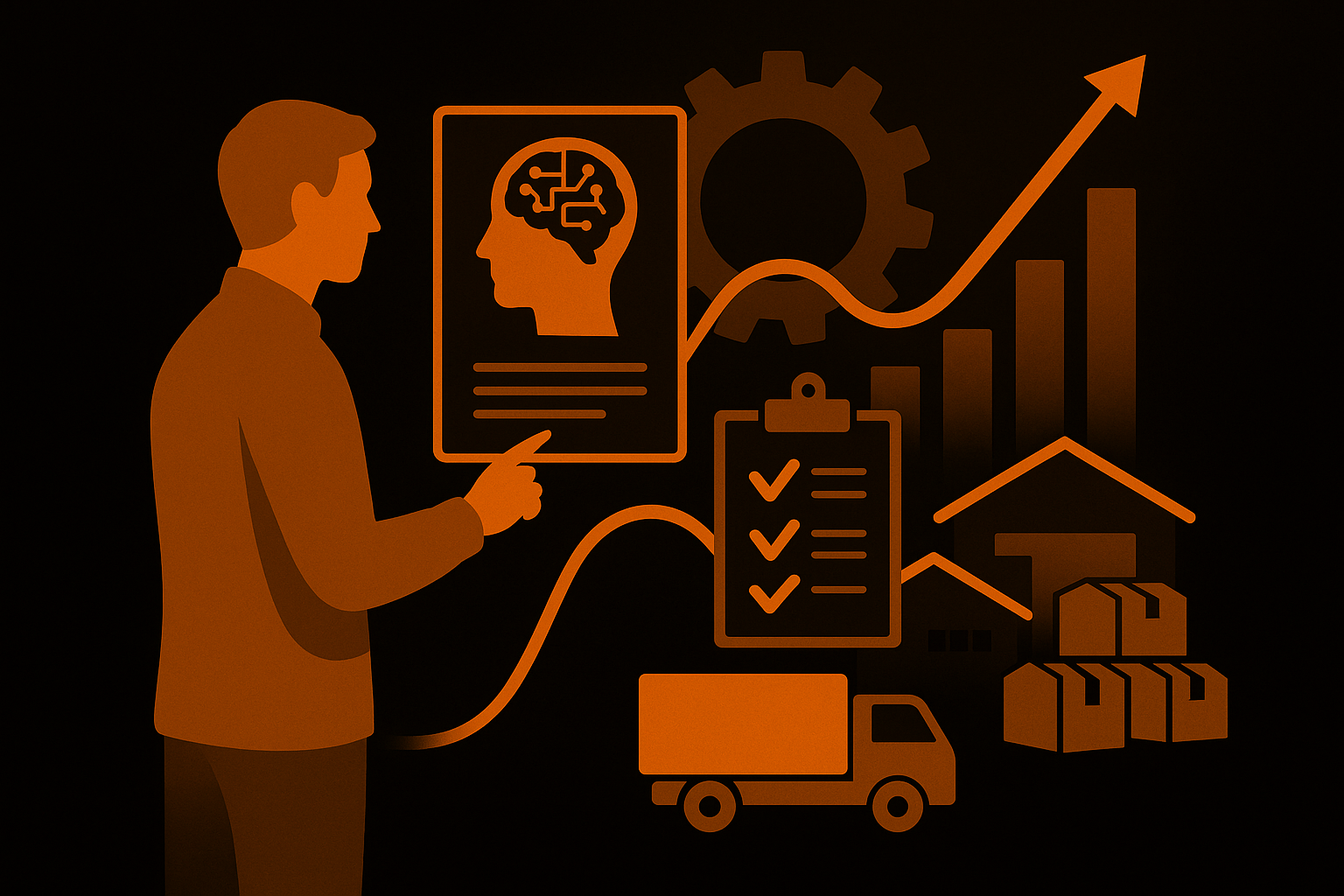
If there’s one area that’s evolving faster than anyone expected, it’s the supply chain. From raw materials to doorstep deliveries, everything is getting connected, automated, and now — intelligent.
The IBM Institute for Business Value notes that agentic AI embedded into operational workflows allows 62 % of supply-chain leaders to accelerate decision-making and 76 % to improve overall process efficiency.
The hero behind this transformation? Agentic AI the next generation of artificial intelligence designed to think, act, and optimize like a human.
According to a recent McKinsey report, companies using AI-driven supply chain management have seen up to 50% reductions in logistics costs, 30% improvements in inventory levels, and 15% increases in service levels .
Let’s dive into how Agentic AI makes supply chains not only faster — but smarter, more adaptive, and shockingly efficient.
What Is Agentic AI?
Before we jump in, let’s break it down.
Agentic AI isn’t your average chatbot or predictive algorithm.
It’s an AI system made up of autonomous “agents” — digital entities capable of making decisions, collaborating with other agents, and acting independently to achieve business goals.
Think of it like having hundreds of smart virtual employees — each one handling a different part of your supply chain: tracking shipments, predicting demand, adjusting orders, and communicating with suppliers — all at once, and all in real time.
Why Supply Chains Need Agentic AI
Global supply chains are complex — they involve suppliers, logistics providers, warehouses, and distributors spread across continents.
One small delay in shipping or a sudden spike in demand can send ripple effects across the entire system. Traditional software can’t handle that level of unpredictability.
Here’s where Agentic AI shines. It brings:
- Real-time data awareness
- Predictive decision-making
- Autonomous coordination
- Continuous optimization
In short,it’s like giving your supply chain a brain.
The 3 Core Ways Agentic AI Makes Supply Chains Smarter
Let’s explore the three biggest areas where Agentic AI changes the game:
| # | Smart Supply Chain Benefit | Description |
|---|---|---|
| 1 | Real-Time Decision Making | Instantly analyzes market trends, logistics data, and supplier updates to make quick, accurate decisions. |
| 2 | Cost Optimization | Reduces waste, balances inventory, and automates purchase decisions for better margins. |
| 3 | Disruption Management | Predicts risks like shipment delays or demand surges and adjusts operations before issues escalate. |
Real-Time Decision Making: From Reactive to Proactive
Traditional supply chain management is reactive — teams wait for data, analyze it manually, and then act. That delay costs time, money, and sometimes customers.
Agentic AI flips this approach. It proactively detects and responds to changes as they happen.
For example:
- A sudden delay at a port? The AI instantly reroutes shipments through an alternate hub.
- A supplier reports a shortage? The agent automatically identifies a backup vendor from your approved list.
- Customer demand spikes? It adjusts production schedules in real time.
This kind of instant response helps companies maintain smooth operations even under pressure.
Cost Reduction and Optimization
Every company wants to cut costs — but not at the expense of performance.
That’s where Agentic AI finds its sweet spot.
By analyzing thousands of variables — from transportation costs to storage capacity — it identifies hidden inefficiencies and optimizes them continuously.
Here’s a quick look at how it helps:
| Area | Traditional Approach | With Agentic AI |
|---|---|---|
| Inventory | Fixed reorder points | Predictive restocking based on trends |
| Transportation | Manual route planning | AI-driven route optimization |
| Supplier Selection | Based on cost alone | Based on reliability, speed & ESG metrics |
| Warehouse Management | Reactive stock tracking | Real-time data with IoT integration |
Imagine an AI system that notices a truck route costing $2,000 a week more than an alternative — and automatically reroutes logistics to save money. That’s not science fiction anymore; it’s happening in forward-thinking organizations today.
Disruption Management: Predict, Prevent, and Adapt
Remember the chaos of the 2020 global supply chain crisis? Companies that used AI-based forecasting systems recovered 2x faster than those that didn’t.
Agentic AI takes that further by predicting disruptions before they happen and automatically adjusting strategies.
Let’s say:
- A hurricane is predicted in Southeast Asia. The AI alerts logistics partners, shifts orders to other regions, and updates delivery estimates.
- Raw material prices are expected to rise. The system buys in advance and locks in lower rates.
- Demand for a product is about to spike. The AI scales production capacity automatically.
That’s real resilience — powered by predictive analytics and autonomous decision-making.
Real-Time Collaboration Between AI Agents
One of the coolest things about Agentic AI is how these agents communicate with each other. Each one handles a specific domain — logistics, inventory, procurement, etc. — and they share data constantly to make smarter joint decisions.
This seamless collaboration is one of the core applications of Agentic AI, where autonomous agents coordinate in real time to optimize complex business operations like supply chain management, resource allocation, and predictive maintenance.

For instance:
- The inventory agent notifies the procurement agent that stock is low.
- The procurement agent contacts the supplier agent for immediate restocking.
- The logistics agent finds the quickest and cheapest delivery route.
This multi-agent collaboration creates a self-healing supply chain — a system that can correct its own problems without human intervention.
Real-World Results: What Companies Are Seeing
Companies adopting Agentic AI report massive improvements in speed, accuracy, and savings.
According to Deloitte’s AI in Operations 2025 Report:
- 70% of supply chain leaders say AI-driven forecasting improved accuracy by over 25%.
- 60% reduced operational costs by 10–20%.
- 80% saw significant improvement in risk visibility.
In short — AI isn’t just helping manage supply chains; it’s transforming them into living, learning ecosystems.
Key Features That Power Agentic AI
Let’s look at the core components that make Agentic AI so powerful:
- Machine Learning Models: For demand prediction and logistics forecasting.
- Natural Language Processing (NLP): For reading supplier documents and emails automatically.
- IoT + Sensor Data: For live tracking of shipments, temperature, and location.
- Digital Twins: For simulating supply chain scenarios before making real changes.
- Autonomous Decision Engines: For executing actions without human approval (within policy limits).
These features work together to eliminate human error, improve transparency, and accelerate decisions across the entire supply chain.
The Environmental Impact of Smarter Supply Chains
Sustainability is becoming a major focus for global companies — and Agentic AI contributes in a big way.
By optimizing routes, minimizing overproduction, and cutting energy waste, AI agents help reduce a company’s carbon footprint.
For example:
- AI can identify when trucks are half-empty and combine loads to reduce fuel use.
- Predictive analytics can prevent overstocking — reducing waste from unsold goods.
This is one of those rare cases where what’s good for business is also good for the planet.
The Human + AI Partnership
There’s often a fear that AI will replace human jobs. But in supply chain management, the opposite is true — it’s enhancing human capability.
AI agents take care of the repetitive, data-heavy work, while humans focus on strategy, creativity, and relationship-building.
Think of it as a partnership:
- AI handles the how.
- Humans focus on the why.
That balance allows companies to innovate faster and adapt better — all while employees spend their time on more meaningful work.
The Future of Agentic AI in Supply Chains
We’re just at the beginning of the Agentic AI revolution.
Over the next few years, we’ll see:
- Fully autonomous supply chains that manage themselves end-to-end.
- Predictive manufacturing, where production adjusts automatically based on consumer behavior.
- AI-driven sustainability, optimizing for both profit and planet.
- Collaborative ecosystems, where AI agents from different companies negotiate in real time.
The possibilities are huge — and businesses that adopt early will have an undeniable advantage.
Quick Recap: Why Agentic AI Matters
| Key Benefit | What It Means for Businesses |
|---|---|
| Speed | Faster decisions and responses |
| Efficiency | Lower costs, better resource use |
| Resilience | Predicts and adapts to disruptions |
| Visibility | Real-time end-to-end tracking |
| Sustainability | Greener, optimized logistics |
Final Thoughts
Agentic AI is more than a buzzword — it’s a practical, powerful technology that’s transforming global supply chains right now.
It brings together machine learning, automation, and real-time intelligence to make logistics smarter, faster, and more adaptive than ever before.
Companies that embrace it today will not only reduce costs but also future-proof their operations for the unpredictable world ahead.
So if you’re ready to make your supply chain smarter, it’s time to start integrating Agentic AI tools — because the future of efficiency is already here.
At Wavenest.ai, we help businesses build AI-powered automation systems and Agentic AI solutions tailored for their operational workflows — from supply chain intelligence to enterprise automation.
If you’re ready to explore how AI can transform your business,
Contact us today to discuss your project with our AI and automation experts.