The future of HR is here. Explore the HR Technology Trends 2025 that are changing how teams hire, engage, and grow. From AI and analytics to employee experience platforms, discover how technology is reshaping the modern workplace.


Did you know that by 2025, over 70% of HR teams will rely on AI and analytics to make hiring decisions? HR Technology Trends 2025 are transforming how companies recruit, engage, and retain talent. The world of HR is changing faster than ever.
If you are wondering how HR technology is changing talent acquisition in 2025, or what employee experience platforms for hybrid workforces 2025 will look like, you’re in the right place. Technology is no longer just a support function in HR. It’s becoming a driver of strategy, culture, and business outcomes. In this blog, we’ll explore seven HR technology innovations that will change work forever.
We’ll also cover data-driven HR decision making and analytics in 2025 and skills-based hiring and internal mobility tech in 2025—topics that are shaping the future of work.
1. AI-Powered Talent Acquisition & Recruitment
One of the biggest shifts in HR is how AI is transforming recruitment. In 2025, AI won’t just assist HR—it will lead the charge. From resume screening to candidate matching, AI is making recruitment faster, smarter, and more accurate.

How AI is changing talent acquisition in 2025:
- Resume Screening and Shortlisting: AI tools scan thousands of resumes in minutes. They identify skills, experience, and even cultural fit. This saves HR teams hundreds of hours.
- Candidate Matching: AI predicts which candidates will succeed based on historical hiring data. This means better hires with fewer bad fits.
- Bias Reduction: AI can help reduce human bias in recruitment by focusing on skills and performance indicators rather than demographics.
- Chatbots for Candidate Engagement: AI-powered chatbots guide candidates through the application process, answer questions instantly, and provide updates.
The result is a faster recruitment process, better hires, and more time for HR professionals to focus on strategy. The human layer remains essential, but AI handles repetitive and data-heavy tasks.
2. Employee Experience Platforms for Hybrid Workforces
Work isn’t just in the office anymore. Hybrid and remote workforces are becoming the norm. This means HR technology must adapt. Employee experience platforms for hybrid workforces 2025 are designed to give employees a consistent, personalized experience, no matter where they are.
| Feature | Description | Benefit |
|---|---|---|
| Unified Tools | Onboarding, performance, learning, and recognition in one platform | Saves time, reduces complexity |
| Personalized Dashboards | Customized views for each employee | Better engagement and clarity |
| Real-Time Engagement | Pulse surveys, sentiment tracking, instant feedback | Quick insights for proactive HR action |
| Learning & Development | Integrated courses and upskilling opportunities | Continuous employee growth |
| Collaboration Tools | Chat, video, and project integrations | Supports hybrid teamwork and connectivity |
Key features of modern employee experience platforms:
- Unified Tools: Onboarding, performance management, learning, and recognition all happen in one platform.
- Personalized Dashboards: Employees get insights, feedback, and tasks tailored to their role and location.
- Real-Time Engagement: Pulse surveys, sentiment tracking, and engagement analytics allow HR to act immediately.
- Learning and Development: Employees can access courses, upskilling, and reskilling resources directly within the platform.
These platforms ensure employees feel connected, valued, and productive—whether working remotely, in the office, or somewhere in between.
3. Advanced People Analytics & Data-Driven HR Decision Making
Data is transforming HR from a support function to a strategic partner. Data-driven HR decision making and analytics in 2025 will enable organizations to make smarter, evidence-based decisions.
How HR is using data today:
- Predictive Analytics: Forecast employee turnover, identify high-potential employees, and spot skill gaps before they become problems.
- Performance Tracking: Real-time dashboards show employee performance, engagement, and productivity.
- Business Outcome Alignment: HR metrics are increasingly tied to business outcomes such as revenue, customer satisfaction, and innovation.
- Diversity, Equity, and Inclusion (DEI) Analytics: Track progress on DEI initiatives and ensure fair practices in hiring, promotions, and compensation.
By leveraging analytics, HR can move from reactive problem-solving to proactive strategy. Decisions are no longer guesswork—they are backed by data and trends.
4. Skills-Based Hiring & Internal Mobility Tech
Traditional hiring focuses on titles and years of experience. In 2025, HR is moving to a skills-based approach, using technology to identify and match skills to roles, both inside and outside the organization.
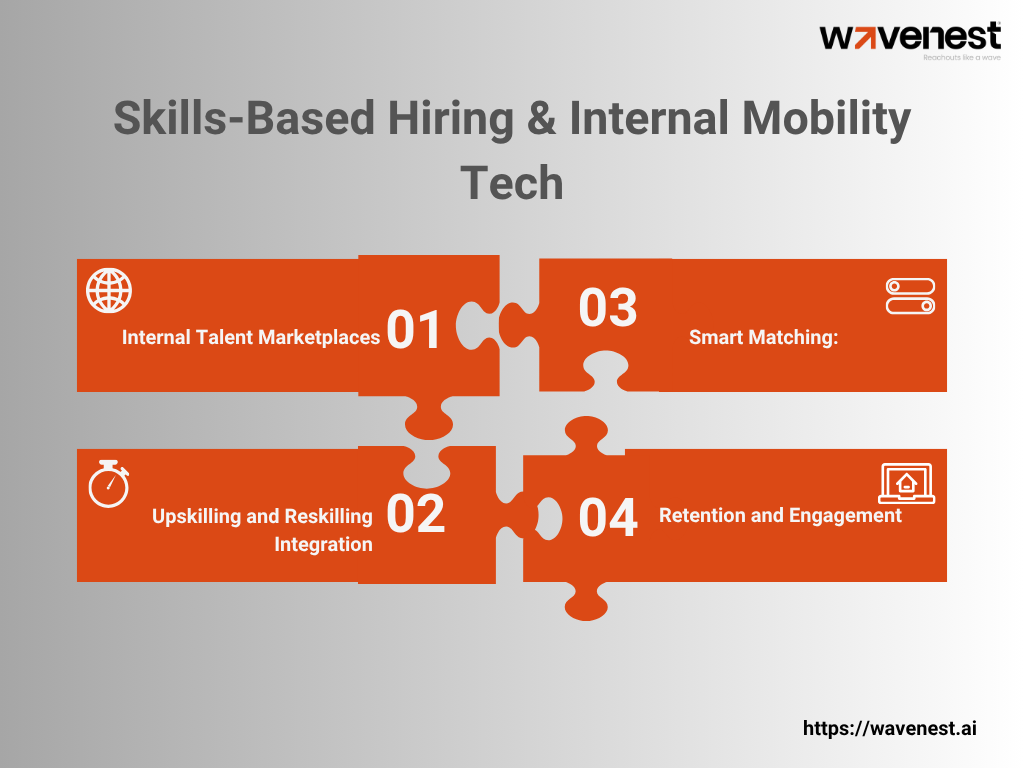
What skills-based hiring and internal mobility tech in 2025 look like:
- Internal Talent Marketplaces: Employees can see open roles that match their skills, enabling internal mobility.
- Upskilling and Reskilling Integration: Platforms identify skill gaps and provide personalized learning paths.
- Smart Matching: AI matches employees with projects or roles where their skills are most needed.
- Retention and Engagement: Employees feel valued when they can grow internally rather than leaving for external opportunities.
This approach reduces turnover, improves employee satisfaction, and ensures organizations retain top talent. It also empowers employees to take ownership of their career growth.
5. Wellness, Mental Health & Well-Being Technology
Wellness is no longer optional. Organizations that neglect employee well-being risk burnout, disengagement, and high turnover. HR tech is stepping in to fill this gap.
What wellness and mental health tech offers:
- Mental Health Platforms: Access to counselors, stress management tools, and mindfulness programs online.
- Wellness Tracking: Tools to monitor stress, fatigue, and overall health trends in the workforce.
- Proactive Interventions: Data-driven insights allow HR to address burnout or disengagement before it becomes critical.
- Employee-Centered Design: Programs are personalized, accessible, and integrated into daily workflows.
The bottom line: HR tech makes wellness a core part of organizational strategy, not just a side initiative.
6. Unified HR Systems & Seamless Integration
HR tech has traditionally been fragmented. Payroll, recruiting, performance, and learning often exist in separate systems. In 2025, organizations are moving toward unified platforms.
Benefits of unified HR systems:
- Integrated Data: Recruitment, performance, payroll, and engagement all flow seamlessly.
- Reduced Errors: Fewer manual processes and duplicate entries.
- Better Reporting: Comprehensive dashboards provide insights across the organization.
- Improved Employee Experience: A seamless system reduces friction and enhances daily interactions.
Unified platforms simplify operations, save costs, and create a smoother experience for HR teams and employees alike.
7. Blockchain, Compliance & Transparent HR Processes
Compliance and transparency are growing priorities, especially for global and remote organizations. Blockchain technology is emerging as a solution in HR.
Key applications of blockchain in HR:
- Credential Verification: Ensures candidate qualifications and certifications are authentic.
- Smart Contracts: Automates payroll, benefits, and freelancer payments with transparency.
- Audit Trails: Immutable records of HR decisions enhance trust and compliance.
- Global Workforce Management: Simplifies HR operations across multiple countries and regulations.
Blockchain ensures that HR processes are secure, verifiable, and efficient, building trust among employees and stakeholders.
Why These Innovations Matter
These HR technology trends are more than just tools—they’re reshaping how work gets done. They help HR move from reactive tasks to proactive strategy, improve employee experience, and drive business outcomes.
| Innovation Focus | Key Impact |
|---|---|
| AI & Analytics | Smarter hiring, faster decisions |
| Employee Experience Platforms | Higher engagement, better retention |
| Skills-Based Tech | Internal mobility, upskilling opportunities |
| Wellness & Well-Being Tech | Healthier, more productive workforce |
| Unified HR Systems | Streamlined processes, fewer errors |
By adopting these innovations, organizations can boost productivity, retain top talent, and create a more engaged and motivated workforce. HR becomes a strategic partner rather than just an administrative function. These tools make work smarter, faster, and more human-centered.
These seven HR technology trends are not just hype—they are changing the very nature of work:=
How HR Leaders Can Prepare
Embracing HR technology trends requires strategy and foresight. Start by auditing your current tech stack to identify gaps and opportunities. Focus on the innovations that will have the biggest impact first, rather than trying to adopt everything at once. Train your HR teams to use new tools effectively, and pilot projects on a small scale before rolling them out organization-wide.
HR leaders need a roadmap to adopt these trends effectively. Here’s a practical approach:
- Audit Your Tech Stack: Understand existing tools, gaps, and areas for improvement.
- Focus on One Trend First: Pick the technology with the highest impact for your organization.
- Train HR Teams: Technology is only effective when your team knows how to use it.
- Start Small, Scale Up: Pilot programs reduce risk and allow for learning.
- Measure Outcomes: Track key metrics such as hiring speed, engagement, retention, and productivity.
- Prioritize Employee Experience: Ensure tech helps, not hinders, employee workflows.
- Stay Ethical and Transparent: Especially with AI, analytics, and sensitive employee data.
By following these steps, HR can embrace technology without overwhelming employees or disrupting culture.
FAQs
Q: Will these HR technology trends make HR professionals obsolete?
A: No. Technology enhances HR capabilities but cannot replace human judgment, empathy, or decision-making.
Q: Are these technologies expensive? Will small businesses be left behind?
A: While some tools require investment, scalable solutions are available. Small businesses can start with one platform or pilot a key technology.
Q: What are the most important Wavenest features for embracing HR technology trends 2025?
A: Wavenest offers an AI‑powered HRMS that automates recruitment, payroll, attendance and performance management, supporting businesses as they adopt new systems aligned with HR Technology Trends 2025.
Q: How does skills‑based hiring and internal mobility tech in 2025 fit with Wavenest solutions?
A: The shift to “skills‑based hiring and internal mobility tech in 2025” means HR platforms must match employees to roles based on skills rather than just titles. Wavenest’s architecture supports this by enabling internal talent tracking and mobility workflows.
Q: Can Wavenest help with “how HR technology is changing talent acquisition in 2025”?
A: Yes. The platform supports AI‑driven candidate screening and matching, which directly addresses the question of how HR technology is changing talent acquisition in 2025.
Q: How quickly will these trends affect workplaces?
A: Some technologies are already in use. Full adoption will vary but could take 2–5 years for many organizations.
Q: What is the biggest barrier to adoption?
A: Change management, not technology. Aligning culture, processes, and people is often the hardest part.
Final Thoughts
HR Technology Trends 2025: 7 Innovations That Will Change Work Forever highlights that HR is no longer just administrative. It’s a strategic function empowered by AI, analytics, unified platforms, and innovative tools.
The future of HR is here. It’s smarter, faster, more human-centered, and technology-enabled. Whether you’re a large enterprise or a growing business, these trends are worth attention, investment, and strategic planning.
Explore how Wavenest HR solutions can help you stay ahead with HR Technology Trends 2025. These innovations are reshaping how work gets done, making HR smarter, faster, and more employee-focused. By embracing AI, analytics, employee experience platforms, and skills-based tech, organizations can improve engagement, retention, and overall productivity.
At Wavenest, we help businesses implement these innovations seamlessly. From AI-powered recruitment to unified HR systems, our solutions are designed to make your HR processes efficient and future-ready. Don’t wait—adopt these trends now and turn your HR department into a strategic powerhouse that drives business success.
Learn more or contact us to discuss how we can transform your HR strategy today.